

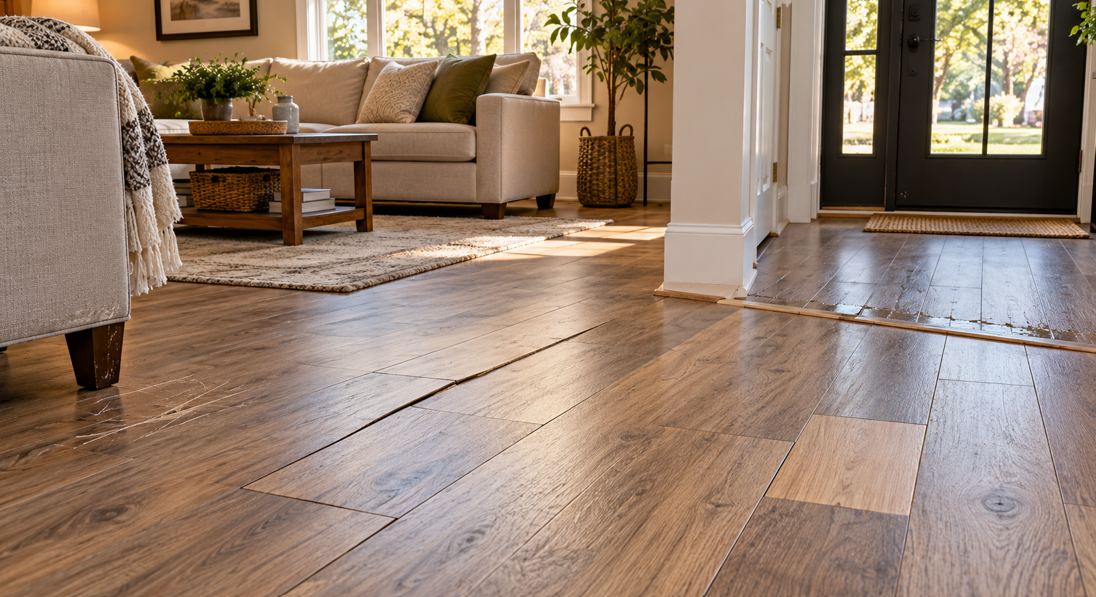
Laminate flooring has come a long way. Modern designs can capture the look of natural wood with impressive detail while offering durability, straightforward maintenance, and strong value for busy households. For homeowners in Morristown, it can be a practical option for living rooms, bedrooms, hallways, home offices, and other frequently used spaces.
However, choosing laminate is only part of the process. Many flooring problems happen because of decisions made before installation, during product selection, or after the floor is already in place. Some mistakes are small and easy to correct. Others can affect how the floor looks or performs over time.
With more than 60 years of experience helping Southern Minnesota families select flooring, Bisek Interiors understands that a successful renovation often comes down to asking the right questions early. For Morristown homeowners considering laminate, avoiding these 7 common mistakes can help create a floor that looks good, suits everyday life, and performs well through Minnesota's changing seasons.
Mistake 1: Choosing Laminate Based on Appearance Alone
Flooring is a major visual feature, so appearance matters.
The mistake is assuming that appearance is the only factor that matters.
Two laminate products may look very similar while having different characteristics related to thickness, construction, surface durability, moisture resistance, and intended use.
A flooring sample can show color and pattern, but it does not tell the full story.
Match the Flooring to the Room
A quiet guest bedroom and a busy main hallway do not experience the same level of daily activity.
Before choosing a laminate product, consider where it will be installed and how that room is used.
A busy household may need flooring that can better handle:
Regular foot traffic
Children
Pets
Furniture movement
Frequent cleaning
Entryway debris
Everyday spills
Homeowners should also think about how long they expect the flooring to remain in place.
A product selected for a short-term cosmetic update may be approached differently from flooring intended to serve as a long-term foundation for the home.
Consider More Than the Color
Color often receives the most attention, but plank size, texture, pattern variation, and finish also influence the overall result.
For example, a wide plank laminate may create a more open appearance, while a narrower design can feel more traditional.
A matte texture may feel softer and more natural, while a smoother finish can create a cleaner, more polished look.
The best choice usually balances style with practical performance.
Mistake 2: Ignoring Minnesota's Seasonal Conditions
Southern Minnesota does not have one consistent climate.
Homes move through humid summers, cold winters, spring moisture, autumn temperature changes, and dry indoor conditions during the heating season.
Even though laminate is engineered rather than solid wood, indoor environmental conditions still matter.
Seasonal Changes Can Affect Flooring
Laminate flooring is typically installed as a floating floor system, meaning the planks need appropriate space around the perimeter to allow for normal movement.
If environmental conditions and installation requirements are ignored, problems such as lifting, separation, or edge stress may occur.
The goal is not to eliminate all seasonal movement. Instead, the installation should accommodate the conditions the product is designed to experience.
Indoor Humidity Matters
Minnesota winters can produce very dry indoor air, particularly in heated homes.
Summer conditions can bring considerably more humidity.
Maintaining a reasonably stable indoor environment can benefit many interior materials, including flooring.
Homeowners can also follow the manufacturer's guidelines regarding suitable temperature and humidity ranges.
Ask Whether the Product Fits the Space
Not every laminate product is intended for every location.
Before installing laminate in an area where moisture may be a concern, such as an entryway, basement, or kitchen, homeowners should confirm whether the specific product is suitable for that application.
The term "laminate" describes a category, not one single construction.
Different products can have different performance characteristics.
Mistake 3: Assuming All Laminate Has the Same Water Resistance
Water resistance is one of the areas where homeowners can easily misunderstand product differences.
Some laminate products are designed with enhanced water-resistant features, while others are better suited to relatively dry interior spaces.
Treating every laminate floor as though it can handle unlimited moisture can lead to problems.
Water-Resistant Does Not Mean Care-Free
Even when a product offers improved moisture protection, spills should still be cleaned promptly.
Standing water can potentially reach plank joints, room edges, transitions, or areas where the flooring meets walls and fixtures.
Daily habits still matter.
For Morristown households, a few simple practices can help:
Wipe spills promptly.
Use mats at exterior entrances.
Avoid leaving wet footwear directly on the floor.
Follow manufacturer-approved cleaning methods.
Avoid excessive water during routine cleaning.
These habits are especially relevant during Minnesota winters when snow and slush can easily be tracked indoors.
Pay Attention to Room Use
A bedroom typically faces fewer moisture concerns than a mudroom or kitchen.
When comparing Laminate flooring, homeowners should explain how the room is actually used rather than choosing a product solely from a display sample.
This helps narrow the options to flooring that better matches the demands of the space.
Mistake 4: Skipping Proper Subfloor Preparation
A beautiful laminate floor still depends on what sits beneath it.
One of the easiest mistakes to overlook is assuming the existing floor or subfloor is automatically ready for installation.
It may not be.
A Flat Surface Matters
Laminate flooring performs best when installed over a properly prepared surface.
If the subfloor has significant unevenness, movement, damage, or other irregularities, those issues can affect the finished floor.
Potential problems may include:
Movement underfoot
Unusual noise
Stress at plank joints
Visible unevenness
Poor transitions between rooms
These issues are much easier to address before installation begins.
Preparation Is Part of the Installation
Floor preparation may involve evaluating:
Subfloor condition
Flatness
Existing floor coverings
Moisture conditions
Room transitions
Door clearances
Suitable underlayment
The exact requirements vary according to the flooring product and installation area.
Professional installers can assess the space before the new flooring is placed, helping ensure the surface is suitable for the selected laminate.
Mistake 5: Forgetting About Underlayment
Underlayment can be easy to ignore because it disappears once the finished floor is installed.
That does not make it unimportant.
Depending on the laminate product and subfloor, underlayment may contribute to sound reduction, comfort, moisture management, or installation performance.
Not Every Floor Uses the Same Underlayment
Some laminate products include an attached pad.
Others require a separate underlayment.
The correct choice depends on the manufacturer's instructions and the type of subfloor beneath the flooring.
Using the wrong material or unnecessarily doubling underlayment can affect the installation.
For this reason, homeowners should not assume that thicker always means better.
Think About Sound
Sound can be especially important in multi-level homes or rooms where footsteps are easily heard.
A suitable flooring system can help create a more comfortable acoustic environment, although results depend on the product, construction, subfloor, and room.
This is another reason to consider the entire flooring system rather than focusing only on the visible plank.
Mistake 6: Picking a Trend Without Considering the Home
Flooring trends can provide useful inspiration.
They can also encourage homeowners to choose a style that looks impressive online but does not work as well with the actual house.
The best flooring choice is usually one that complements the home rather than competing with it.
Consider Existing Finishes
Before choosing laminate, compare samples with:
Kitchen cabinetry
Interior trim
Wall colors
Countertops
Doors
Furniture
Staircases
Built-in features
A flooring sample that looks attractive on its own may carry undertones that clash with these existing elements.
Avoid Trying to Match Everything
Homeowners sometimes try to make laminate match nearby wood furniture or cabinetry exactly.
This can be difficult and unnecessary.
A room can look more natural when different materials coordinate without being identical.
For example, warm medium-tone laminate can work well with lighter cabinets, while light flooring can provide attractive contrast against dark furniture.
View Samples in the Actual Home
Showroom lighting can differ significantly from residential lighting.
A sample may appear cooler, warmer, lighter, or darker depending on the room.
Morristown homeowners can benefit from looking at samples:
In morning daylight
During afternoon light
Under evening lamps
Beside cabinetry
Near existing trim
Next to major furniture
This provides a more realistic idea of how the finished floor may look.
Mistake 7: Treating Laminate as Maintenance-Free
Laminate is known for being relatively easy to maintain, but easy maintenance is not the same as no maintenance.
Daily habits still influence how the floor looks over time.
Use the Right Cleaning Routine
One common mistake is using too much water.
Laminate typically does not need aggressive wet cleaning.
Routine care may include:
Vacuuming or sweeping loose debris
Cleaning spills promptly
Using flooring-approved cleaning products
Following manufacturer instructions
Avoiding excessive standing water
A straightforward routine is usually enough for normal household use.
Protect High-Traffic Areas
Morristown families may have specific areas where flooring receives more wear.
These often include hallways, kitchen pathways, entry areas, and spaces between exterior doors and main living rooms.
Entry mats can help collect grit and moisture before it reaches the flooring.
Furniture pads beneath chairs and tables can also reduce unnecessary surface marking.
Be Careful When Moving Furniture
Dragging heavy furniture directly across laminate can potentially damage the surface.
Furniture should be lifted where possible or moved using suitable protective methods.
This becomes particularly important during renovations, room rearrangements, or holiday decorating when furniture may be moved more frequently.
Bonus Mistake: Not Thinking About How the Rooms Connect
Although this list focuses on 7 common mistakes, another issue deserves attention: treating each room as a completely separate flooring decision.
Flooring affects visual flow throughout the home.
If laminate is being installed across a living room, hallway, and dining area, homeowners should think about how those spaces connect.
Consistency Can Make Rooms Feel Larger
Using one flooring style across connected areas can help a home feel more continuous.
Frequent changes in flooring material or color can visually divide a floor plan.
This is particularly noticeable in open-concept spaces.
A consistent laminate can help create a unified foundation while rugs, furniture, and lighting establish individual zones.
Plan Transitions Early
Some rooms require transitions because different materials or flooring heights meet.
Planning these details before installation can help create a more intentional finished appearance.
The location of doorways, adjoining rooms, stairs, and existing flooring all influence transition planning.
How Morristown Homeowners Can Choose Laminate More Confidently
Avoiding common mistakes begins with slowing the process down and evaluating the entire project.
Homeowners do not need to become flooring experts. They simply need to consider the factors most relevant to their household.
Start With the Room
Ask:
What room is being renovated?
How much foot traffic does it receive?
Is moisture likely?
Are pets present?
Are children using the space?
Does the room connect to other flooring?
These questions immediately narrow the options.
Then Consider Style
Once practical requirements are clear, focus on appearance.
Think about:
Light, medium, or dark tones
Warm or cool undertones
Plank width
Surface texture
Pattern variation
Finish
This approach helps prevent homeowners from falling in love with a style before confirming whether it suits the space.
Compare Several Samples
Small differences can become much more noticeable across an entire floor.
Comparing several options side by side helps homeowners identify which tone works best with the room.
Samples can also reveal whether a design has significant variation from plank to plank.
Some homeowners prefer consistent coloring, while others like the character created by visible variation.
Neither approach is inherently better.
Why Professional Installation Can Prevent Common Problems
Many laminate flooring mistakes are avoidable when installation is properly planned.
Professional installers can evaluate the room, subfloor, product requirements, transitions, and layout before installation begins.
They can also determine how planks should be positioned through connected rooms and where appropriate expansion space is required.
This planning is particularly important in Southern Minnesota, where flooring experiences major seasonal changes in indoor temperature and humidity.
Bisek Interiors has served the region since 1963, giving the team decades of experience helping local families choose and install flooring suited to Minnesota homes.
That local knowledge can be valuable when homeowners are deciding between different flooring products or trying to understand how a specific option fits their renovation.
A Simple Checklist Before Buying Laminate Flooring
Before making a final decision, Morristown homeowners can work through a basic checklist.
Room Requirements
Confirm:
Where the flooring will be installed
Expected traffic levels
Potential moisture exposure
Existing subfloor
Connected rooms
Entry points
Household Requirements
Think about:
Children
Pets
Cleaning habits
Furniture
Entertaining
Long-term plans for the home
Design Requirements
Compare:
Flooring tone
Undertones
Plank size
Texture
Cabinetry
Wall colors
Major furnishings
Installation Requirements
Discuss:
Subfloor preparation
Underlayment
Transitions
Expansion requirements
Installation method
Manufacturer instructions
Taking these steps can help turn a large selection of laminate flooring into a much more manageable decision.
Make the Right Laminate Choice for a Morristown Home
Laminate can be an excellent flooring option for households looking for durability, attractive design, and practical value.
The key is avoiding the assumption that every laminate floor is the same.
Choosing based only on appearance, overlooking seasonal Minnesota conditions, misunderstanding moisture resistance, skipping subfloor preparation, using the wrong underlayment, following trends without considering the home, and neglecting basic maintenance can all affect the finished result.
A better approach is to consider the entire flooring system and how it fits everyday household life.
For Morristown homeowners, that means thinking about everything from winter footwear and summer humidity to pets, room traffic, existing finishes, and long-term maintenance expectations.
A little planning before installation can help create a floor that feels intentional rather than simply new.
Homeowners ready to compare laminate options can request a free estimate and speak with the Bisek Interiors team about product selection, installation, and flooring options suited to their Morristown home.


