

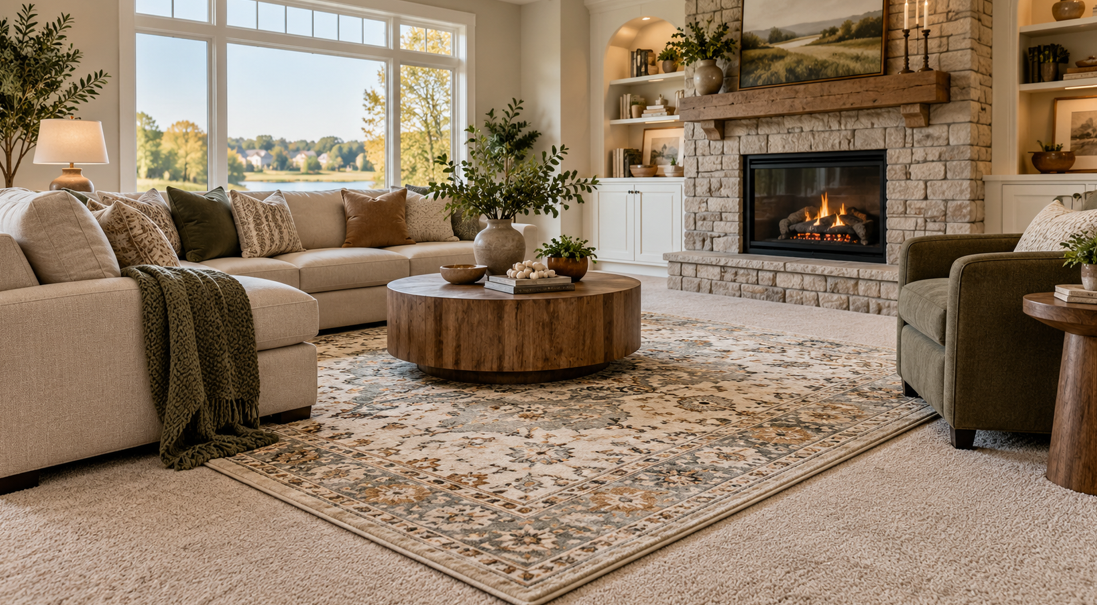
Carpet already adds softness, warmth, and comfort to a room, but that does not mean the floor needs to remain visually simple. Area rugs can work beautifully over carpet when they are chosen carefully, adding color, texture, definition, and personality without taking away from the comfort already underfoot.
For homeowners in New Prague, this combination can be especially appealing as Southern Minnesota moves into cooler weather. Long fall and winter seasons naturally make warm, layered interiors feel more inviting, and combining carpet with an area rug can create that cozy look without requiring a major renovation.
The key is getting the balance right. The area rug needs to complement the carpet rather than compete with it, while the size, texture, pattern, and placement all need to suit the room.
With more than 60 years of family-owned experience helping Southern Minnesota homeowners choose flooring, Bisek Interiors understands how important it is for a room to feel comfortable as well as coordinated. For New Prague homeowners looking to make carpeted spaces feel more polished, area rugs can be a simple and effective design tool.
Why Put an Area Rug Over Carpet?
At first, placing a rug over carpet may seem unnecessary. After all, carpet already covers the floor.
But the 2 materials serve different design purposes.
Wall-to-wall carpet creates a consistent foundation across the room. An area rug then adds another visual layer on top.
That extra layer can help define a seating area, introduce color, create contrast, or bring attention to a particular part of the room.
It Adds Visual Interest
A carpeted room can sometimes feel very uniform, especially when the carpet is a neutral beige, gray, taupe, or cream.
An area rug breaks up that uninterrupted surface.
Depending on the style, it can introduce:
Pattern
Color
Texture
Contrast
Shape
A stronger focal point
This can make the room feel more intentionally designed.
It Helps Define Different Areas
Area rugs are especially useful in larger bedrooms, family rooms, basements, and open spaces.
For example, a rug beneath a sofa and chairs can visually establish a conversation area even though the entire room is carpeted.
In a large bedroom, a rug beneath the bed can define the sleeping area.
In a family room, one rug might visually organise the seating space while leaving the surrounding carpet visible.
It Creates Extra Warmth
Carpet already feels comfortable underfoot, but layering a rug can make a room feel even softer and warmer.
That can be particularly appealing in New Prague homes during Minnesota's colder months.
The effect is not only physical.
Layered textiles also create visual warmth, helping a room feel more relaxed and inviting throughout fall and winter.
Start With the Carpet as the Foundation
The easiest way to choose an area rug is to treat the existing carpet as the base of the room.
Rather than choosing a rug independently, look at how its color, texture, and pattern interact with the carpet underneath.
If homeowners are selecting new Carpet, thinking about future rugs at the same time can make the overall design feel more coordinated.
Consider the Carpet Color First
The carpet's color will strongly influence which rugs work well.
Neutral Carpet
Neutral carpet provides the most flexibility.
Beige, cream, taupe, soft gray, and similar shades can work with a wide variety of rug colors.
Homeowners may use the rug to introduce:
Deep blue
Forest green
Rust
Burgundy
Warm brown
Muted gold
Terracotta
Soft pastels
Neutral carpet also allows patterned rugs to stand out without overwhelming the room.
Dark Carpet
Dark carpet can create a rich foundation, but the rug needs enough contrast to remain visible.
A lighter or more colorful rug can prevent the room from feeling too heavy.
Cream, tan, muted blue, warm gray, or patterned designs with lighter elements can work well.
Light Carpet
Light carpet creates an open, airy appearance.
A rug can either continue that soft palette or introduce stronger contrast.
For a calm look, choose slightly deeper neutral tones.
For more visual impact, use a rug with rich colors or a distinct pattern.
Match the Rug to the Carpet Texture
Texture matters just as much as color.
Placing a very thick rug over very plush carpet can sometimes create an unstable or overly soft surface.
The rug may shift, wrinkle, or feel less defined.
Low-Pile Carpet Offers Flexibility
Shorter, denser carpet tends to provide a stable base for many types of area rugs.
This gives homeowners more freedom to experiment with:
Woven rugs
Patterned rugs
Flatweaves
Low-pile rugs
Moderately plush styles
The contrast between the carpet and rug can add depth without making the floor feel bulky.
Plush Carpet Needs Careful Rug Selection
When the existing carpet is already thick and soft, adding another highly plush rug may create too much volume.
A thinner or more structured rug may work better.
This provides visual contrast while keeping the overall floor comfortable and balanced.
Choose the Right Rug Size
One of the most common decorating mistakes is choosing an area rug that is too small.
A small rug can make furniture appear disconnected and may actually make the room feel less organised.
The rug should generally relate to the furniture arrangement rather than sitting alone in the middle of the room.
Area Rugs in Living Rooms
For a living room, the rug should visually connect the major furniture pieces.
Depending on room size and layout, homeowners might place:
All furniture legs on the rug
The front legs of sofas and chairs on the rug
The rug beneath the central seating area
The important thing is to make the rug feel intentional.
A rug that barely extends beyond the coffee table may feel undersized.
A larger rug usually creates a stronger and more cohesive arrangement.
Area Rugs in Bedrooms
Area rugs can add warmth and visual structure to carpeted bedrooms.
A rug placed beneath the bed can extend beyond the sides and foot, helping frame the sleeping area.
Another option is to use runners or smaller rugs beside the bed.
However, the rug should still feel proportional to the furniture.
If it is too small, it may look disconnected from the room.
Area Rugs in Dining Areas
Some carpeted dining rooms can also benefit from an area rug.
The rug can help define the dining zone and introduce a stronger design element.
It should be large enough that dining chairs remain on the rug when pulled away from the table.
A rug that is too small can create awkward chair movement and make the space feel cramped.
For dining spaces, homeowners may also prefer materials that are relatively easy to maintain.
Use Rugs to Introduce Color Without Replacing Carpet
One advantage of an area rug is flexibility.
Wall-to-wall carpet is a longer-term flooring choice, while a rug can be changed much more easily.
This allows homeowners to keep a versatile carpet and update the room through accessories.
Seasonal Changes
A warm-toned rug can create a cozy appearance during fall and winter.
In spring or summer, homeowners may switch to a lighter design.
There is no need to change the entire room.
Small updates to rugs, cushions, throws, and accessories can alter the atmosphere while the carpet remains a neutral foundation.
Changing Design Preferences
Decorating tastes evolve.
A homeowner may prefer farmhouse styling today and a cleaner transitional style several years later.
Neutral carpet can support both looks, while area rugs provide a simpler way to adapt the room.
This is one reason many homeowners choose understated carpet colors for larger rooms.
Layer Patterns Carefully
Pattern is one of the easiest ways to add personality.
However, a rug should complement the rest of the room rather than competing with every other design element.
If curtains, upholstery, wallpaper, or cushions already contain strong patterns, a quieter rug may create better balance.
If the rest of the room is relatively simple, the rug can become the main patterned feature.
Traditional Rug Patterns
Traditional designs can pair beautifully with neutral carpet.
These rugs often include detailed borders, floral motifs, medallions, or multiple coordinated colors.
They can work particularly well in:
Traditional living rooms
Formal bedrooms
Dining areas
Homes with antique or classic furniture
A traditional patterned rug can also bring warmth to newer homes by adding a sense of history and depth.
Geometric Rugs
Geometric patterns suit contemporary and transitional interiors.
Simple lines, diamonds, grids, and abstract shapes can make a carpeted room feel more modern.
They work particularly well when the rest of the furniture uses clean forms and minimal ornamentation.
Subtle Patterns
Not every rug needs to make a strong statement.
Tone-on-tone patterns can provide texture and visual interest without introducing dramatic color.
This can be useful in bedrooms or family rooms where homeowners want a calmer atmosphere.
Coordinate With Furniture and Walls
The rug does not need to match every item in the room.
In fact, rooms often look more natural when colors are coordinated rather than identical.
A useful approach is to select a rug that repeats 1 or 2 colors already present elsewhere.
For example:
A blue rug may connect with blue cushions.
A rust-toned pattern may relate to artwork.
A cream rug may echo curtains.
A green accent may complement plants or upholstery.
These connections help the room feel intentional.
Avoid Matching the Rug Too Closely to the Carpet
If the rug and carpet are almost the same color and texture, the rug may visually disappear.
Contrast makes layering more effective.
The difference does not need to be dramatic.
A slightly darker rug on light carpet or a patterned rug over a plain floor can be enough.
Texture can also create contrast when the colors remain similar.
Think About Shape
Rectangular rugs are the most common, but they are not the only option.
The shape can help reinforce the layout of the room.
Rectangular Rugs
These work well beneath sofas, beds, dining tables, and larger furniture arrangements.
They are versatile and easy to coordinate.
Round Rugs
A round rug can soften a room with many straight architectural lines.
It may work well beneath a round table, in a reading corner, or in a smaller seating area.
Runners
Runners can provide visual interest in longer spaces.
They may be used in areas such as:
Bedrooms
Large walk-in closets
Connecting areas
Selected low-traffic zones
The existing carpet and rug construction need to provide enough stability for the intended placement.
Prevent Rugs From Moving on Carpet
One practical concern with placing rugs over carpet is movement.
A rug may shift or ripple, particularly when placed over a softer carpet.
The correct rug pad designed specifically for carpeted surfaces can help provide stability.
Homeowners should make sure the pad is suitable for both the rug and the carpet underneath.
Using the wrong type of backing could potentially affect the underlying flooring.
Furniture placement can also help keep larger rugs secure.
Use Layering to Make Large Rooms Feel Cozier
Large carpeted rooms can sometimes feel visually empty.
An area rug helps bring the furniture together and create a more intimate zone.
This can be especially useful in finished basements, large family rooms, and open-plan homes.
Rather than filling the entire room with furniture, a rug can help establish a clear focal area.
A sofa, 2 chairs, and a coffee table positioned around a rug may feel more connected than the same furniture sitting across an uninterrupted floor.
Make Smaller Rooms Feel Intentional
Rugs are not only for large spaces.
In smaller rooms, a carefully sized rug can add personality without requiring many decorative pieces.
The key is avoiding a rug that is so small that it appears like an isolated mat.
A rug that connects with the main furniture usually feels more deliberate.
Layer Rugs With Carpet for Children's Rooms
Children's rooms are another place where rugs can be useful.
Wall-to-wall carpet already provides softness, while an area rug can define a play zone or add a colorful design element.
Because rugs can be changed relatively easily, the room can evolve as children grow.
A bright playful rug used during early childhood may later be replaced with something more mature without changing the underlying carpet.
Practical considerations such as stability and easy cleaning should remain part of the selection process.
Area Rugs for Pet-Friendly Homes
Homes with pets can still use rugs over carpet successfully.
Homeowners may want to consider:
Easy-to-clean rug materials
Patterns that disguise minor everyday marks
Low or medium pile
Secure placement
Durable construction
Very delicate rugs may not be the best fit for high-activity pet areas.
The goal is to choose a design that suits real household life.
Consider Minnesota's Long Indoor Season
Southern Minnesota's climate is an important part of interior planning.
Long winters mean families spend significant time indoors.
That makes comfort and visual warmth particularly valuable.
Carpet already provides a soft surface, while an area rug can add another layer of texture and warmth to the room.
This combination can make family rooms, bedrooms, and living spaces feel especially welcoming during New Prague's coldest months.
At the same time, rugs placed near entrances need additional thought because snow, moisture, and road debris can enter the home during winter.
Entry mats designed for moisture and debris are generally more practical near exterior doors, while decorative rugs can be used farther inside.
Use Rugs to Highlight Architectural Features
Area rugs can also draw attention to specific features within a room.
A rug might help frame:
A fireplace
A window seating area
A reading corner
A conversation space
A dining table
A bed
This can be particularly effective in larger rooms where several architectural elements compete for attention.
The rug creates a visual anchor.
Keep the Overall Room Balanced
Layering carpet and rugs works best when the room does not become overloaded with visual information.
If the rug has a strong pattern, furniture and accessories can be simpler.
If the furniture includes bold colors or detailed upholstery, a quieter rug can provide balance.
The carpet itself also plays a role.
A neutral carpet creates more freedom for decorative layering, while a carpet with noticeable texture or pattern may call for a simpler rug.
Choosing Carpet With Future Styling in Mind
Homeowners replacing carpet can make future decorating easier by thinking beyond the immediate room design.
A versatile carpet provides a strong foundation for changing rugs and furnishings over time.
Neutral colors remain popular for this reason.
However, neutral does not have to mean plain.
Texture, subtle pattern, and tonal variation can give the carpet character while still allowing future rugs to work easily.
The right choice depends on the room and household.
Bedrooms may prioritise softness.
Family rooms may need greater durability.
High-traffic areas may benefit from carpet designed to handle frequent use.
Professional guidance can help homeowners compare options based on both appearance and practical needs.
Why Professional Flooring Advice Helps
Interior styling begins with the floor.
When carpet selection is right from the beginning, decorating the rest of the room becomes much easier.
Bisek Interiors has served Southern Minnesota families since 1963, providing flooring guidance based on decades of local experience.
For New Prague homeowners, that means carpet choices can be considered alongside room function, household activity, Minnesota's climate, and future decorating plans.
Homeowners can compare carpet colors, textures, and constructions in person while also considering how rugs and furniture may eventually fit into the finished space.
A Simple Rug and Carpet Checklist
Before buying an area rug for a carpeted room, homeowners can ask a few simple questions.
Look at the Carpet
Consider:
Color
Pile height
Texture
Pattern
Overall condition
Look at the Room
Think about:
Furniture arrangement
Room size
Main walking paths
Natural light
Existing colors
Architectural features
Look at the Rug
Compare:
Size
Shape
Pattern
Color
Texture
Thickness
Maintenance needs
Check the Placement
Make sure the rug:
Connects visually with furniture
Does not look undersized
Remains stable
Does not create awkward movement
Complements rather than hides the carpet
Taking these steps makes it easier to create a layered look that feels intentional.
Create a Warmer New Prague Home With Carpet and Area Rugs
Carpet and area rugs do not need to compete.
Used together, they can create a comfortable, layered interior with more color, texture, and personality.
The carpet acts as the room's foundation, while the rug provides flexibility.
Homeowners can use rugs to define seating areas, introduce patterns, highlight furniture, add seasonal color, or simply make the space feel more complete.
For New Prague households, this combination is particularly well suited to Southern Minnesota's long indoor season. Soft flooring and layered textiles can help create rooms that feel welcoming throughout fall and winter while remaining easy to update as decorating styles change.
The best results come from considering scale, color, texture, rug stability, furniture placement, and the carpet underneath rather than choosing each element independently.
New Prague homeowners considering new carpet can request a free estimate and explore flooring options with the Bisek Interiors team.


