

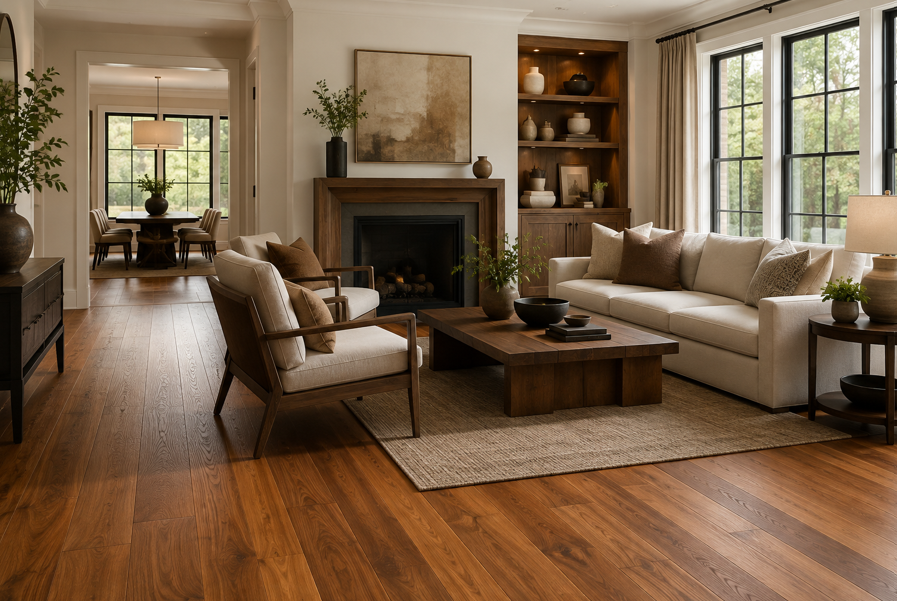
Hardwood flooring has always brought natural warmth to a home, but in 2026 that warmth is becoming the centre of the design conversation. Cool grey floors and heavily washed finishes are giving way to honey oak, soft caramel, natural brown and richer mid-tone shades that feel comfortable, grounded and easy to live with. For Morristown homeowners, these colours offer something especially valuable: a timeless foundation that works through every Minnesota season.
The appeal is not simply about following a trend. Warm wood tones can make a room feel welcoming without making it look dated or overly formal. They complement traditional farmhouses, updated ranch homes, new builds and open-plan family spaces. They also pair naturally with colours many homeowners already use, including creamy whites, warm greiges, earthy greens, navy blue and natural stone.
At Bisek Interiors, we have helped Southern Minnesota families select flooring for more than 60 years. That experience has shown us that the best floor is not merely the one that looks impressive in a photograph. It should suit the home’s light, layout, daily activity and long-term needs. If you are considering hardwood flooring in Morristown this year, these 2026 trends can help you narrow the choices while keeping your home’s character at the centre of the decision.
Why Warm Wood Tones Are Leading in 2026
The movement towards warmer flooring has been developing for several years, but it is especially clear in 2026. Houzz reported from The International Surface Event that “warm” was the defining direction in new flooring introductions, with mid-tone wood looks appearing across hardwood, laminate and luxury vinyl collections. Cooler greys have not disappeared entirely, but many now carry brown undertones rather than the blue or silver cast common in previous years.
This shift reflects a broader preference for interiors that feel personal, relaxed and connected to natural materials. Homeowners still appreciate clean lines and uncluttered rooms, but they increasingly want those spaces to feel comfortable rather than stark. Warm hardwood provides grain, subtle colour variation and depth while remaining neutral enough to work with changing furniture, paint and décor.
Mid-tone browns can also be practical in active homes because they often conceal everyday dust, small marks and pet hair better than very dark espresso or extremely pale floors. Colour is only one part of performance, but it can support a sensible decision alongside species, finish, construction and maintenance needs.
What Counts as a Warm Wood Tone?
“Warm wood” is a broad description rather than one specific colour. It includes shades with golden, amber, red or earthy brown undertones. Some are light and airy; others are deep and dramatic.
Popular warm directions for 2026 include natural white oak with a soft beige appearance, honey and wheat tones, caramel and medium oak shades, chestnut and warm walnut looks, and muted reddish-browns that bring out the character of the grain.
The right choice depends on what surrounds the floor. A sample that looks golden under showroom lighting may appear more neutral beside a south-facing window or warmer beside cream cabinetry. Paint, trim, countertops, rugs and natural light all influence how the finished floor reads. Viewing larger samples in the actual room is therefore one of the most useful steps in the selection process.
Trend 1: Natural and Mid-Tone Oak
Natural-looking oak is one of the most versatile choices for Morristown homes. Its grain gives the floor visible character, while a light-to-medium warm stain keeps the overall appearance calm. The result works with modern farmhouse, transitional, rustic and contemporary interiors.
In 2026, many homeowners are choosing oak finishes that look gently refined rather than heavily coloured. Soft beige, oat, sand, honey and light caramel tones allow the natural grain to remain part of the design.
Mid-tone oak is especially practical for rooms connecting several spaces. It can bridge warm kitchen cabinets, painted trim and mixed furniture finishes without requiring every wood element to match. In an open-plan kitchen and living area, that flexibility helps the floor create continuity without making the room feel one-dimensional.
Natural oak also ages gracefully from a style standpoint. Decorative trends may move between bold colour and quiet neutrals, but a balanced oak floor can support both. For homeowners planning to stay in their house for many years, that adaptability may matter more than selecting the most dramatic finish of the moment.
Trend 2: Honey, Wheat and Soft Golden Finishes
Golden flooring is returning, but the updated look is softer than the glossy orange oak many people remember from earlier decades. Today’s honey and wheat tones tend to be muted, with lower-gloss finishes and natural variation from plank to plank.
These colours are useful in Southern Minnesota, where long winters make warmth and light indoors especially welcome. A gently golden floor can make a living room, bedroom or dining area feel brighter during darker months. It can also complement summer daylight without becoming overpowering.
The key is moderation. A finish with subtle amber undertones often feels more current and versatile than a strongly orange stain. Warm white walls, soft green cabinetry, natural textiles and dark metal accents can create balance and prevent the room from looking overly traditional.
Trend 3: Rich Brown Floors With Natural Depth
Not every 2026 hardwood trend is light. Rich walnut, chestnut and medium-to-dark brown tones are gaining attention because they add depth and a sense of permanence. These floors can work particularly well in larger rooms, homes with abundant daylight or interiors that need visual grounding.
The current approach is warmer and more nuanced than the nearly black floors popular in some earlier design cycles. Instead of uniform espresso, homeowners are exploring shades with visible grain and tonal movement. That variation keeps a darker floor from feeling flat.
Rich brown hardwood can look beautiful with cream walls, brass accents, leather furniture and natural stone. It can also suit a modern room when paired with simple cabinetry and restrained décor. Darker floors may show dust, scratches and light-coloured pet hair more readily, however, so households should consider maintenance expectations before selecting the deepest option.
Trend 4: Matte and Low-Sheen Finishes
Colour receives most of the attention, but sheen has a major effect on how hardwood looks. In 2026, matte and low-sheen finishes continue to fit the preference for natural, relaxed interiors. They allow grain and texture to stand out without creating strong reflections.
A lower sheen can make warm colours feel softer and may minimise the appearance of small surface marks compared with a high-gloss finish, although no finish makes a floor scratch-proof. For active families, pets and busy living spaces, a practical finish combined with a suitable wood species can make everyday care more manageable.
Matte floors suit rooms with large windows because they reduce glare and let the material remain the focus. A wire-brushed warm oak can feel casual and textured, while a smooth low-sheen plank creates a cleaner, more tailored effect.
Trend 5: Wider Planks and Visible Character
Wide planks remain popular because they display more of the wood’s natural grain and create a calmer visual rhythm. Fewer seams can make an open area feel more expansive, while longer boards add a sense of flow.
Many current wide-plank floors embrace natural variation instead of aiming for perfect uniformity. Knots, mineral streaks and changes in grain can give the floor an individual identity. The National Wood Flooring Association recently highlighted continued demand for lighter, natural visuals, warmth, versatility and wide-plank engineered products in current hardwood collections. racter should still be selected intentionally. A highly varied rustic floor can be beautiful in a farmhouse-inspired home, but it may feel busy beside heavily patterned countertops or cabinetry. A quieter grade may better suit a minimalist interior. Comparing several full-size boards, rather than relying on one small sample, helps reveal the true range of colour and grain.
Trend 6: Engineered Hardwood for Flexible Installation
Solid hardwood remains an excellent choice in suitable spaces, while engineered hardwood provides additional installation possibilities. Engineered hardwood has a real wood surface over a layered core designed to improve dimensional stability. It may be suitable in locations where solid hardwood is less practical, depending on the product and site conditions.
The question is not whether solid or engineered hardwood is universally better. The right choice depends on the subfloor, room level, moisture conditions, installation method, desired appearance and future refinishing expectations.
The Hardwood selection at Bisek Interiors includes options that can be evaluated for both design and performance. A professional can explain product construction, finish, warranty and installation requirements so that the final choice is based on the home rather than appearance alone.
Choosing the Right Warm Tone for Your Morristown Home
A trend can provide inspiration, but your home should determine the final decision. Begin with the room’s natural light. North-facing rooms often receive cooler, softer light, so a honey or warm natural finish may prevent the space from feeling flat. South- and west-facing rooms can intensify golden undertones, making a more neutral warm brown a better balance.
Observe samples in morning, afternoon and evening light. Artificial lighting matters too: warm bulbs may emphasise amber tones, while cooler bulbs can make a brown stain appear greyer.
Next, coordinate rather than trying to match every wood surface perfectly. Hardwood does not need to be identical to cabinets or furniture. Medium oak flooring can work with darker walnut furniture because both share warmth, while the difference in depth keeps the room interesting. Warm hardwood also balances painted cabinetry in cream, green, navy or muted blue.
Consider the whole floor plan. If new hardwood will meet tile, carpet or existing wood, review transition points and sightlines. Consistent flooring through connected living areas may make a home feel larger, but another material may be more practical in certain rooms.
Homes in Morristown, Montgomery, Waterville and Mankato vary widely in age and layout. An older home may have smaller rooms and original details worth preserving, while a newer open-plan property may benefit from wider planks and a consistent colour through the main level. Flooring should support the character already present.
Finally, match the floor to daily life. A household with children, dogs and frequent visitors may prioritise a textured surface, durable finish and colour that disguises ordinary wear. Ask how the floor should be cleaned, whether it can be recoated or refinished, and what the warranty requires before making a decision.
Hardwood and Southern Minnesota’s Seasonal Changes
Minnesota’s climate makes moisture management an important part of hardwood ownership. The state experiences meaningful seasonal changes, and the Minnesota DNR notes that roughly two-thirds of average annual precipitation falls from May through September. d naturally responds to its environment. In humid conditions it can gain moisture and swell; in dry conditions it can lose moisture and shrink. Seasonal movement does not automatically mean something is wrong, but uncontrolled changes can contribute to cupping, gaps or splits. The National Wood Flooring Association recommends maintaining indoor temperatures of 60–80°F and relative humidity of 30–50 per cent throughout the year to help reduce these issues. a Morristown household, that may mean using air conditioning or a dehumidifier during humid summer periods and adding humidity during dry winter heating months. It also means wiping up spills promptly, using mats near entrances and avoiding excessive water or steam during cleaning.
Professional installation matters as well. The installer should assess the subfloor, site conditions and product requirements. Acclimation, moisture testing, expansion space and installation method should follow the manufacturer’s instructions for the selected floor.
Styling Warm Hardwood Through the Seasons
Warm hardwood supports seasonal updates without requiring a major redesign. In spring and summer, pair it with linen, light upholstery, woven baskets and soft green or blue accents. In autumn, rust, olive, deep red and textured wool can bring out richer undertones. During winter, cream throws, layered rugs and warm lighting can make the room especially comfortable.
It also works across several design styles:
Modern farmhouse: natural oak, black accents, warm white paint and simple textiles;
Transitional: medium brown hardwood, painted cabinetry and a mix of classic and clean-lined furniture;
Rustic: character-grade planks, stone, leather and visible grain;
Contemporary: wide planks, matte finishes, minimal trim and restrained colour;
Traditional: richer brown tones, detailed furniture and layered rugs.
The most successful rooms usually repeat the floor’s warmth in small ways rather than matching it everywhere. A wood-framed mirror, leather chair, woven shade or warm metal fixture can connect the palette without making it feel repetitive.
Caring for Warm-Toned Hardwood
Routine care helps hardwood maintain its appearance. Sweep, dust mop or vacuum with a bare-floor setting to remove grit that could scratch the finish. Wipe spills immediately with a dry or slightly damp cloth, and use a cleaner recommended for the floor’s specific finish. The NWFA advises against wet mops and steam mops because repeated moisture can damage both the finish and the wood. protective pads under furniture legs and breathable mats at exterior doors. Keep pet nails trimmed and lift rather than drag heavy objects. Rugs can protect high-traffic areas, but use rug pads approved for the finish and occasionally move rugs or furniture to allow more even light exposure.
Over time, a wood floor may be renewed through recoating or, where its construction allows, sanding and refinishing. Ask about those possibilities when comparing products, especially if long service life is a priority.
Bring 2026 Hardwood Warmth Home
Warm wood tones are popular in 2026 because they combine natural beauty with everyday liveability. From soft wheat and honey oak to caramel, chestnut and warm walnut, there is room to create a floor that feels current without losing the timeless quality people value in real wood.
For Morristown homeowners, the best result begins with more than selecting a colour from a small image. It involves seeing samples in the room, understanding the wood’s construction and finish, planning for Minnesota’s seasonal humidity and choosing professional installation.
Bisek Interiors brings more than 60 years of family-owned flooring experience to that process. Visit the Montgomery showroom to compare hardwood colours, plank widths, textures and construction options in person, or request a free estimate for your project. With thoughtful guidance and the right product, a warm hardwood floor can become a welcoming foundation for your home through 2026 and for many years beyond.


